Most Australians do not have an income problem. They have a structure problem.
They work hard. They get paid. They try to save. Maybe they put a bit extra into the offset. Maybe they invest now and then. But years pass and it still feels like they are pushing uphill. The reason is usually simple: they are relying on one stream of income to do the job of four.
That is the trap.
A single wage can cover bills. It can even fund a decent life. But on its own, it usually does not create enough momentum to build lasting wealth, absorb shocks, and open up better property options at the same time. If you want more control over your next move, whether that is buying a home, investing, or building long-term financial breathing room, you need to understand the four income streams that actually move the needle.
Here’s what matters: earned income, business income, investment income and passive income all play different roles. They are not equal. They do not arrive at the same time. And not every person will build them in the same order. But if you want a stronger financial base, you need to know what each one does and where the trade-offs sit.
Why one income stream is rarely enough
A wage gives you certainty. That matters. Regular income is what allows most people to rent, borrow, save, and stay afloat when costs keep rising. But there is a catch. Wages are usually capped.
Yes, you might negotiate a raise. You might work overtime. You might switch jobs and lift your pay. But earned income still has constraints. Your time is limited. Your energy is limited. And in many roles, compensation is not tightly linked to value created.
I have seen this play out with smart, disciplined people who do everything “right” and still feel stuck. Their income goes up, but so do repayments, living costs, school fees and expectations. The number on the payslip improves. The freedom often does not.
That is the signal vs noise most people miss. More income helps. More income streams changes the game.
Income stream one: earned income is your foundation
Earned income is the money you receive for your labour. Salary, wages, contracting income tied directly to your work, that is the base layer.
For most people, this is where the journey starts. And that is not a bad thing. Earned income brings predictability. It teaches discipline. It gives you the first surplus you can direct somewhere useful.
But it also comes with a built-in trade-off. The more stable the role, the more likely the upside is limited. Some professions offer great security but modest pay growth. Others offer stronger upside, but more pressure and more volatility.
So what should you do with earned income?
First, optimise it. That does not just mean asking for more money for the sake of it. It means getting clearer on the value you create, the leverage you have, and the ceiling in your current role. Sometimes the right move is negotiating harder. Sometimes it is changing employers. Sometimes it is getting brutally honest that your career path is safe but financially capped.
Second, stop judging earned income too harshly. A strong salary can still be a powerful engine if you use it properly. Plenty of high-income professionals build wealth well from this starting point. The problem is not the wage itself. The problem is treating it like the whole plan.
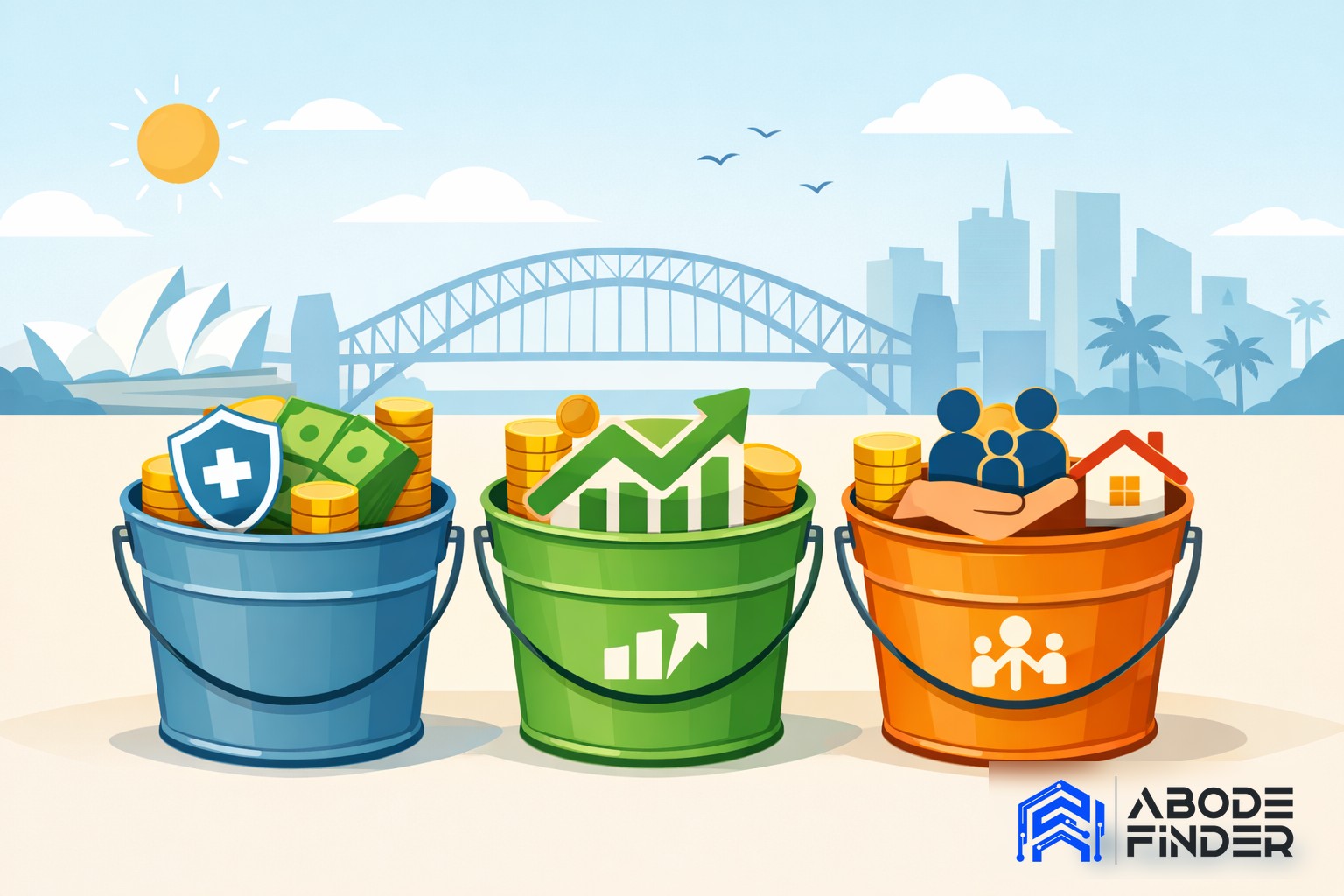
If your cash flow still feels messy, this pairs naturally with Stop Mixing Your Money: The 3-Bucket System That Builds Wealth. It is a useful internal read because before you invest well, your cash usually needs cleaner boundaries.
Income stream two: business income removes the cap, but adds pressure
Business income is where things change.
This is the income you generate by running your own operation, whether that is a small service business, a commission-based model, a trade, a consultancy, or something more scalable. The upside is obvious. You are no longer boxed into a salary band. If the business grows, income can grow with it.
But here’s the catch. Revenue is not income.
This is where people get caught. Money lands in the account and it feels like progress. Then GST, tax, super, software, wages, insurance and admin start taking their share. Suddenly the top line looked healthy, but the owner is working longer hours for less certainty and sometimes less money.
That does not mean business income is bad. It means it demands more than skill in the thing you sell. A great plumber is not automatically a great business owner. A great buyer’s advocate is not automatically good at marketing, cash flow management, pricing, hiring or sales. The widget is only one part of the machine.
The rule of thumb is simple: if you want business income, you need to understand numbers before growth. Cash flow before ego. Margin before revenue.
Done well, business income can be powerful because it creates scale. Done badly, it can turn into a full-time stress test with no safety net.
Income stream three: investment income starts making money work for you
This is the point where wealth-building becomes more interesting.
Investment income is money your assets generate while you still actively manage the strategy behind them. That could be dividends, distributions, rental income, or income from a portfolio strategy that is designed to produce cash flow.
This is where many Australians hesitate. They save diligently, but they delay investing because cash feels safer. The problem is that cash on its own rarely gets you where you want to go over the long term. It can protect liquidity. It cannot usually do the heavy lifting of real wealth creation by itself.
That is why investment income matters. It is the shift from “I earn money” to “my assets also produce money”.
For property buyers, this matters more than people think. If your long-term goal is to build options through property, you need to think beyond deposit size. You need to think about what kind of financial machine you are building. Can your surplus be redirected into assets? Can those assets produce income? Can that income help fund the next move without stretching your personal cash flow too thin?
That is where structure starts to matter.
If you are early in that process, the Buying Chance Calculator is the practical first step. It helps put real numbers around your borrowing position before emotion takes over.
Income stream four: passive income is the long game
Passive income gets talked about badly online, usually by people trying to sell shortcuts.
In the real world, passive income is usually built slowly. It is what shows up when the heavy lifting was done earlier. A property with solid rental income and manageable debt. A portfolio producing distributions. Assets held in a way that can support lifestyle without requiring constant personal labour.
This is the stage most people say they want, but very few build deliberately.
Why? Because passive income is usually the result of years of good decisions, not one clever move. It comes after earned income funded the start. After business or career income created surplus. After investment income began compounding. Passive income is usually what mature assets become.
So no, this is not about fantasy. It is about sequencing.
The practical question is not “How do I quit work next year?” It is “What am I building now that could produce reliable income later?”
That question matters whether you are buying your first home or your third investment property. Entry price matters, but holding power matters more. The asset has to fit the life you actually have, not the one you hope appears later.
The mistake most people make with all four
Most people never build the full ladder because they get stuck over-weighting one stage.
Some stay in wage mode forever. They keep waiting for the next raise to change everything.
Some jump into business too early, without systems, cash buffers or sales discipline.
Some invest before their cash flow is stable, then panic the first time life gets expensive.
Some want passive income now, without doing the years of compounding that usually come first.
That is why there is no one perfect path. There are trade-offs.
A secure employee with strong savings discipline can build serious wealth.
A business owner can create upside quickly, but also more downside.
An investor can accelerate progress, but only if the assets are chosen well and held through cycles.
Probabilities, not certainties.
What this means for property buyers and investors
At AbodeFinder, this is where the conversation becomes practical.
Property decisions are rarely just about the property. They are about the income structure behind the buyer. The same suburb can be a sensible move for one person and a dangerous one for another, depending on cash flow stability, borrowing strength, holding power and what other income streams exist behind the purchase.
That is why broad advice is not enough.
A buyer relying on one stretched wage needs a different plan from a household with surplus business income. An investor with existing asset income can take a different level of risk from someone still building their first buffer. A high-income professional with no investing structure can still be weaker than a modest-income household with cleaner systems and better asset discipline.
Now, the part most people miss: the property itself does not save a weak structure.
A good suburb helps. A sensible entry price helps. Strong demand, tight supply, good yield and manageable vacancy risk all help. But if the financial structure behind the purchase is fragile, the deal can still become a pressure point.
That is why suburb selection and due diligence belong in the same conversation as income structure. If you are still narrowing where to buy, How Smart Buyers Spot Growth Suburbs Before the Headlines Catch Up is the right follow-on read. It fits this topic because once your money structure is working, the next question is where that capital should go.
A practical way to think about the four income streams
If you are feeling stuck, do not ask which of the four sounds smartest. Ask which one you need to strengthen next.
If you have no stability, earned income is still the focus.
If your salary is capped and you have the skill set and appetite, business income may be the growth lever.
If your surplus is sitting idle, investment income is probably the missing piece.
If you already have assets producing income, the next step may be improving quality, reliability and tax efficiency so that passive income becomes more real over time.
And if you are thinking, “Okay, but what should I do?”, start here.
Get clear on your current mix.
Are you relying on one stream?
Are you trying to invest without a buffer?
Are you earning well but not directing surplus into assets?
Are you buying property with no real plan for what comes after settlement?
That is the real decision checklist.
Final word
The goal is not to chase every income stream at once.
The goal is to stop expecting one income stream to solve everything.
Most Australians will start with earned income. Many will never build much beyond it. That is usually why progress feels slower than it should.
Real wealth tends to come from layering. First stability. Then surplus. Then assets. Then income from assets. Then optionality.
That is the sequence.
So if you are building toward a home purchase, an investment property, or a more resilient financial base, do not just ask how much you earn. Ask how your income is structured, what it can support, and what your next stream should be.
That is where better decisions start.
Practical next step: if you want to turn your current income into a property plan that actually fits your borrowing power, risk level and time frame, book a strategy call and we’ll pressure-test your plan. And if affordability is still the first constraint, start with the Buying Chance Calculator before you move.