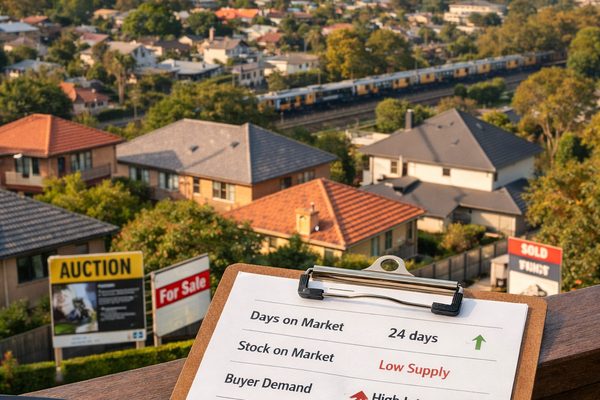
A 0.25% rate rise doesn’t sound like much. On paper, it’s a modest bump. In real life, it flips behaviour.
When the Reserve Bank of Australia (RBA) hikes rates, people don’t just adjust a repayment. They adjust their plans. They pause purchases. They stop “assuming it’ll get easier soon”. And that shift in confidence can cool a market faster than the maths suggests.
If you’re a property investor in 2026, this is the new game: less certainty, tighter cash flow, and a bigger gap between investors who can hold and investors who can’t. This article breaks down what’s changing, what it means for your investment property strategy, and how to move with a clear head. No panic. No hype. Just practical decisions you can live with.
The 2026 shift: it’s not just the numbers, it’s the mood
Interest rates don’t just price money. They price confidence.
A small rate move can be enough to:
-
turn “I’ll buy now and rates will fall later” into “what if rates rise again?”
-
reduce borrowing capacity
-
slow buyer urgency
-
soften competition at inspections and auctions
That’s why, even with a modest hike, you often see momentum change. The RBA doesn’t need to smash the market. It only needs to make buyers second-guess their next step.
Why a small rate rise can still hit the market
Most investors aren’t buying purely off a spreadsheet. They’re buying off a story.
In 2025, the story for many investors was:
-
rates are coming down
-
rents will rise
-
prices will keep moving
-
the pain today will fade over a 2–3 year horizon
In 2026, the story is less comfortable:
-
there may be another one or two rises
-
cash flow might get worse before it gets better
-
the “easy money” mood has faded
That uncertainty is enough to reduce activity.
The “certainty premium” is gone
When people feel safe, they take action. When they feel unsure, they wait. And waiting matters because property is a confidence asset. The biggest booms aren’t always driven by perfect yields. They’re often driven by people feeling certain. When that certainty drops, the market doesn’t necessarily crash. It often just becomes slower, pickier, and harder to predict month-to-month.
What happens to property investors when rates rise
Let’s keep this simple. In a rising-rate environment, three things tend to show up quickly.
1) Investor activity drops
Fewer buyers rush in when they think rates might rise again. That’s especially true for investors who were stretching serviceability or running thin buffers. If you were planning a purchase based on “rates will be lower soon”, your risk profile just changed.
2) High LVR investors feel it first
If you’re buying with a high loan-to-value ratio, small rate changes hit harder because:
-
you’re carrying more debt
-
you have less cash buffer after settlement
-
your repayments rise, but your income often doesn’t
This is where negative cash flow property investment becomes a real stress test, not just an accounting line.
3) The market turns two-speed
This is the part most people miss. Rising rates don’t punish everyone equally. They separate investors into two groups:
Group A: Prepared investors
They know their portfolio numbers, understand their after-tax cash flow, and can hold through volatility.
Group B: Stretched investors
They bought on optimism, assumed conditions would improve, and didn’t model what happens if rates rise again or vacancies last longer. In 2026, the gap between these two groups creates opportunity. Not because you’re “smarter”. Because you can stay standing while others step back.
Where opportunity shows up in 2026
Opportunity in property rarely looks like a green light. It usually looks like fewer competitors. When rates rise, the market often shifts in predictable ways.
Affordability tends to win in a rising-rate cycle
When repayments get heavier, buyers tend to move down the price ladder. That can mean:
-
more demand for affordable houses with land
-
stronger competition in lower price points
-
slower conditions in premium segments
This is why “affordable suburbs” often become more resilient during rate pressure. People still need somewhere to live. They just buy what they can actually service.
Premium markets can become negotiable
If you’re shopping at higher price points, your buyer pool often shrinks faster. That doesn’t mean bargains appear everywhere. It means:
-
vendors become more open to clean offers
-
days on market can extend
-
due diligence and negotiation create real advantages
In plain terms: when competition drops, skill matters more.
Don’t buy a postcode, buy the fundamentals
In 2026, headlines will swing weekly. Your strategy shouldn’t.
Instead of chasing “the next hotspot”, focus on fundamentals that hold value through cycles:
-
strong owner-occupier appeal
-
transport and employment access
-
tight long-term supply
-
sensible yields relative to the asset quality
-
rental demand that doesn’t rely on one industry
That’s how you build a portfolio that can ride out rate noise.
The AbodeFinder way to invest when certainty disappears
When the market feels shaky, most people want predictions.
We prefer a better question:
“If I’m wrong, can I still hold?”
That’s the difference between gambling and strategy.
At AbodeFinder, we focus on data-led suburb insights and clear decision making so you can buy with confidence, even when the mood changes. Here’s the approach that works in 2026.
Step 1: Stress-test before you shop
Before you inspect properties, pressure-test the deal.
A basic stress test includes:
-
Rate buffer: model repayments at today’s rate plus 1% and plus 2%
-
Vacancy allowance: assume at least a few weeks vacancy per year
-
Real expenses: insurance, council rates, water, maintenance, property management fees
-
Offset and liquidity: how much cash will you have left after settlement?
-
After-tax cash flow: include depreciation and tax position where relevant
If the deal only works in perfect conditions, it’s not a deal. It’s a wish.
Step 2: Buy fundamentals, not good feelings
Confidence is nice. Cash flow is better.
A 2026 investment property strategy should prioritise assets you can hold:
-
good land component where it matters
-
a dwelling type that renters actually want
-
a location with steady demand drivers
-
a property that won’t get smoked by oversupply
This is also where data-led suburb research matters. You’re not guessing. You’re comparing.
Step 3: Due diligence and negotiation matter more now
When the market slows, a surprising thing happens:
-
great properties still sell
-
average properties sit
-
messy properties become risky
So your edge becomes process:
-
tighter shortlisting
-
deeper checks
-
better negotiation
-
calmer decision making
That’s exactly what a buyer’s agent for investors should bring to the table, especially when uncertainty rises.
Quick decision guide for investors in 2026
Here’s the straight answer framework. Pick the line that matches you.
If you already own
Your job is to remove forced-sale risk.
Do this:
-
review loans and structure
-
check your buffers and redraw access
-
know your portfolio’s break-even point
-
plan for higher repayments before they land
A boring plan beats a clever plan you can’t hold.
If you’re buying your first investment property
You don’t need five properties. You need one good one.
Do this:
-
confirm borrowing capacity in today’s conditions
-
build a buffer before you buy
-
prioritise fundamentals over shiny renovations
-
avoid “it’ll sort itself out later” deals
The first purchase sets the tone for your portfolio. Make it a strong base, not a stress test.
If you’re scaling a portfolio
Your risk is compounding.
Do this:
-
model portfolio-level cash flow, not property-by-property
-
test what happens if rates rise again and rents stall
-
be careful with high LVR stacking
-
focus on quality and holdability
If your plan relies on perfect timing, it’s fragile. Build a plan that works even when timing is average.
FAQ
What happens to property prices when interest rates rise in Australia?
Often the first impact is on buyer activity and borrowing power, which can slow price growth. Markets can become patchy: some segments hold, others soften.
Should I buy an investment property in 2026?
It depends on your cash flow, buffers, and strategy. If you can hold through uncertainty and you buy strong fundamentals, 2026 can offer less competition and better negotiation in certain segments.
How do I stress-test an investment property for rate rises?
Model repayments at today’s rate plus 1% and plus 2%, include vacancy and real expenses, and check after-tax cash flow. If you can’t hold under that scenario, reconsider the deal or adjust the structure.
Is negative cash flow normal right now?
It’s common, especially at high LVR and in expensive markets. The key question is whether it’s manageable and planned for, with buffers and clear timeframes.
Why use a buyer’s agent in 2026?
Because process matters more when markets slow. A buyer’s agent helps with suburb selection, due diligence, negotiation, and avoiding costly mistakes when uncertainty rises.
The bottom line
In 2026, the edge goes to investors who can hold. Not the loudest. Not the boldest. The ones with buffers, clear numbers, and a strategy they can live with if rates rise again. If you want a plan that matches your borrowing capacity and risk tolerance, and you want to buy based on evidence rather than vibes, that’s exactly what AbodeFinder exists to do.
Build your 2026 plan with AbodeFinder
AbodeFinder is a licensed buyer’s agent helping Australians purchase investment property with confidence, using data-led suburb insights and tailored strategy. We work Australia-wide and offer a one-stop shop service, from investment strategy and lending support through to suburb research, property sourcing, due diligence, inspections, negotiation and settlement coordination.
If you’re aiming to buy in 2026, start with a stress-tested plan. Explore AbodeFinder at abodefinder.com.au and decide if you want help executing.