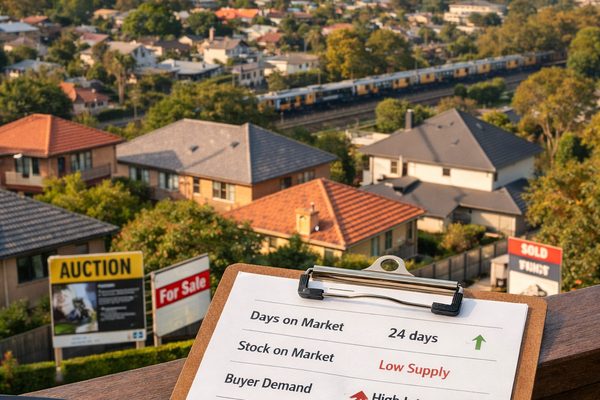
If you follow property content online, you’ve probably seen the same split over and over. One side says now is too risky. Rates are high. Living costs are up. The economy feels shaky. Wait. The other side says buy anything, anywhere, and property will sort itself out.
Neither view is useful. The better question is this: what actually makes an investment property work in a market like this?
That is the real signal. A recent set of investor case studies doing the rounds in the Australian property space gives us a useful lens. The examples include lower-entry deals, solid yields, off-market purchases, manufactured upside through renovation, and properties bought below suburb medians. Some were in Queensland, some in WA, some in Victoria and NSW. The pitch around them was aggressive. That part is noise. But the deals themselves still highlight a few lessons worth paying attention to.
And that matters, because in property investment Australia, results rarely come from hype. They come from buying the right asset, in the right location, with the right holding power.
What’s happening in property investment Australia right now?
A lot of Australians feel the same tension. They believe property is still one of the clearest paths to long-term wealth. At the same time, they’re dealing with tighter borrowing power, higher living costs, and more uncertainty around jobs, tax settings and the broader economy.
So the market feels harder. That does not mean opportunity has disappeared. It means lazy strategy gets punished faster.
Now, the part most people miss: a tougher market often creates a wider gap between average deals and strong deals. When credit is tighter and sentiment is mixed, asset selection matters more. Entry price matters more. Yield matters more. Cashflow buffer matters more. The suburb does more of the heavy lifting. That is why some investors still build equity while others stall.
Signal vs noise: what these eight property deals actually tell us
The loudest message in the original pitch was urgency. Buy now. Don’t miss out. Take the offer before it expires.
Ignore that. Here’s what matters instead.
Across the deals, there were a few repeated patterns:
• yields mostly around 5.6% to 8.6%
• entry prices from the low $300,000s to around $600,000
• capital required often between roughly $50,000 and $120,000
• clear value drivers, such as granny flat potential, cosmetic renovation upside, below-median buying, low-maintenance stock, or off-market access
• interstate purchases in markets where buyers believed there was still room for growth
That combination tells us something important. Investors are not just chasing growth anymore. They are looking for a balance of yield, serviceability and upside.
That is a more rational strategy than buying a negatively geared property and hoping the market bails you out.
The first lesson: yield still matters, but only if it’s real
Several of the examples highlighted yields above 6%, and one well above 8%. That grabs attention, but yield on its own is not enough.
Yield is the annual rent divided by the property value. It shows income return, but it does not tell you the full cashflow story. Management fees, maintenance, insurance, council rates, land tax and vacancy all matter. So what does that mean in plain English?
A strong headline yield is useful only if it is backed by:
• stable tenant demand
• low vacancy risk
• a purchase price that makes sense
• a property type with manageable holding costs
• a suburb where supply is not about to blow out
We’ve seen this play out when investors buy a cheap regional property with a big advertised yield, only to discover weak tenant depth, patchy economic drivers, or a long supply pipeline. The spreadsheet looked good. The asset did not.
Rule of thumb: yield is a buffer, not a strategy by itself.
The second lesson: entry price vs holding power matters more than status
A lot of buyers still default to the same idea: buy in Sydney or Melbourne because that feels safer. Sometimes that works. Sometimes it just means paying too much for too little cashflow. Several of the case studies were in lower-priced markets or outer-metro and regional pockets where the entry cost was more manageable. That matters because entry price shapes holding power. Holding power is your ability to keep the asset through rate changes, vacancy periods and maintenance costs without blowing up your cashflow.
This is one of the clearest trade-offs in investment property Australia right now:
• expensive blue-chip stock may offer stronger long-term scarcity, but weaker short-term serviceability
• lower-entry stock may be easier to hold, with better yield, but needs stricter suburb selection and risk checks
There is no perfect answer. There is only the answer that fits your balance sheet, borrowing position and risk tolerance.
The third lesson: buying below suburb median is useful, but not magic
One of the deals was framed around buying nearly $200,000 below suburb median. That sounds impressive. Sometimes it is. Sometimes it is a trap.
Median price is a rough suburb benchmark. It does not prove a property is under market value. A suburb median can be skewed by larger homes, better land content, different streets or newer stock. Here’s the catch: buying below median only helps if the asset is still aligned with what that market wants. A tired property in a poor pocket is not attractive just because it is cheaper than the suburb average.
A better way to read this signal is:
• Is the property priced below comparable sales for similar stock?
• Is there a clear reason the market may re-rate it?
• Is it in a part of the suburb with decent owner-occupier appeal?
• Does the land, layout or configuration create future upside?
That is the difference between a real value buy and a cheap property.
The fourth lesson: manufactured growth works best when the suburb is already doing some work
A few of the examples leaned on cosmetic renovation, granny flat potential or repositioning the asset. That can work well. But only when the suburb supports it.
This is where a lot of investors get burnt. They focus on the renovation and ignore the market context. A cosmetic reno can improve rent and presentation. It can help close a pricing gap. But it rarely saves a weak location.
The smarter lens is this:
manufactured growth plus market-led growth beats manufactured growth alone.
If the local area has tight vacancy, constrained supply, rising rents, improving wages, infrastructure spend or inward migration, your value-add strategy has a tailwind.
If the suburb is flat, oversupplied or structurally weak, your renovation may just cover costs. Now, the part most people miss: a granny flat strategy is not just about side access or a big block. It is also about council rules, zoning, local demand, build cost, resale impact and tenant profile. The upside has to survive a proper risk check.
The fifth lesson: off-market is not automatically better
The transcript made a big deal out of off-market properties. Off-market can help, but the internet has turned it into a buzzword.
An off-market deal is simply a property sold without broad public advertising. Sometimes it gives a buyer cleaner access and less competition. Other times it just means weaker price discovery and a motivated agent trying to control the process. So, should buyers chase off-market deals? Only if they still stack up on fundamentals.
The decision checklist is simple:
• compare with recent comparable sales
• pressure-test the rent
• check local vacancy and supply pipeline
• assess the street, not just the suburb
• confirm why the property is off-market in the first place
The label is not the value. The numbers are.
What these deals suggest about current buyer behaviour
Across the examples, there was a clear pattern of buyers targeting:
• affordable entry points
• acceptable yield
• upside through land, layout or renovation
• lower-maintenance stock
• interstate opportunities where local knowledge was backed by research or external help
That tells you a lot about where the market is. Buyers are adapting to serviceability constraints. They are looking for assets that can survive higher rates and still produce workable cashflow. They are also looking beyond their home city, because local affordability has pushed them out.
That is rational. But interstate buying adds its own risk. You need stronger due diligence, better suburb selection, cleaner property filters and a process that does not rely on glossy listings or sales talk.
Risk check: what could break a strategy like this?
This is where the original pitch fell short. It focused almost entirely on upside. A better property article should deal with downside as well.
Here are the main risks.
1) Overstating equity gains
A property being “worth more” six months later can be real, but it depends on evidence. Was there a formal valuation? Comparable sales? Broad market lift? Renovation impact? Or just optimism?
2) Confusing a good suburb with a good property
A rising market can hide asset flaws for a while. Eventually the weaker stock underperforms.
3) Ignoring vacancy risk
High yields are great until the property sits empty or attracts weaker tenant demand.
4) Relying on one growth lever
If the whole thesis depends on adding a granny flat, completing a cheap reno, or getting a fast revaluation, the margin for error is tighter.
5) Underestimating holding costs
Rates, insurance, repairs and interest can turn an “easy” deal into a draining one very quickly.
6) Following borrowed conviction
This is a big one. Plenty of buyers outsource all thinking to a mentor, buyers’ agent, course creator or AI tool. That is dangerous. Confidence is cheap. Process is what matters.
The real lesson: property is not about hype, it’s about repeatable filters
The strongest takeaway from these eight examples is not that everyone should rush into the market. It is that good property investing tends to follow a repeatable framework.
In plain English, that framework looks like this:
Buy where the numbers are still workable.
Buy where supply is not running away from demand.
Buy where the asset has more than one reason to perform.
Buy where you can afford to hold through the ugly patches.
Buy based on probabilities, not certainties.
That is the kind of thinking that holds up whether headlines are optimistic or bleak.
So what should buyers do now?
If you’re thinking, “okay, but what should I do?”, start here.
First, stop asking whether now is a good time to buy property in the abstract. That question is too broad to be useful.
Ask better questions:
• What price point can I hold comfortably at today’s rates?
• Do I need yield now, or can I tolerate lower cashflow for better long-term scarcity?
• What suburbs still have a decent supply-demand balance?
• Where is vacancy tight without relying on one fragile local employer?
• Which properties have upside that does not depend on heroic assumptions?
That is how smart buyers move from noise to action.
Property investment Australia in 2026: base case, upside, downside
Let’s keep this grounded.
Base case
Well-selected investment-grade properties in affordable or middle-market suburbs can still perform, especially where supply is constrained and yields help absorb holding costs.
Upside
If rates ease, borrowing capacity improves, or migration and supply pressures stay elevated, some markets could re-rate faster than expected.
Downside
If a buyer stretches too far, overpays, or buys weak stock in a soft local market, cashflow pressure and slow growth can drag on results for years.
That is why suburb and asset selection matter more than ever.
Closing: the market is harder, not impossible
The market is not broken. It is just less forgiving.That is actually useful, because it forces better decisions.
The investors who do well from here are unlikely to be the ones chasing the loudest promises. They will be the ones who understand yield and what drives it, who respect serviceability, who assess vacancy risk, and who choose suburbs based on cycle, supply and holding power, not headlines.
That is the signal. Everything else is noise.
Buying in the wrong suburb is expensive.
Get an AbodeFinder Suburb Report for the data, the risks, and the strategy lens before you commit.