Should you buy property in 2026, or wait for interest rates and prices to fall?
It is one of the most common questions Australian buyers are asking. It is also the wrong place to start.
Australia is entering the second half of 2026 with a 4.35 per cent cash rate, inflation above the Reserve Bank of Australia’s target and continued pressure on housing supply. Buyers are facing larger loans, tighter serviceability assessments and significant differences between local property markets.
None of this means you should rush to buy.
It also does not mean sitting in cash and waiting for perfect conditions is a sound property investment strategy.
The better question is:
Can you buy an appropriate property now and hold it through a range of economic conditions?
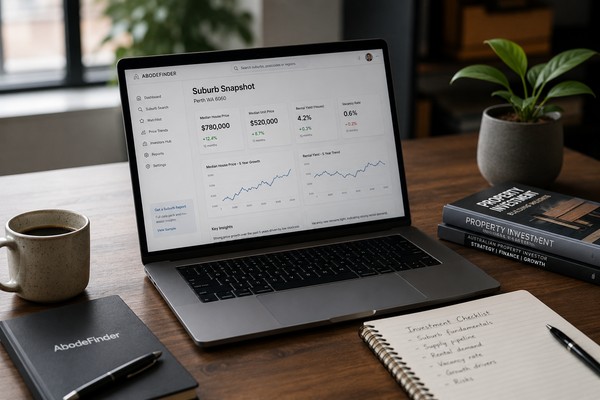
At AbodeFinder, that is how we approach the decision. Start with your numbers. Examine the local evidence. Pressure-test the risks. Then decide.
Is 2026 a good time to buy property in Australia?
There is no national yes or no answer.
For a buyer with stable income, a sufficient deposit and a healthy cashflow buffer, 2026 may present viable opportunities. For someone who would use every available dollar at settlement, buying now could create more risk than opportunity.
Timing is only one part of the decision.
A strong property bought at a reasonable price and held for the long term may survive a difficult entry point. A weak property bought at the “right time” can still underperform because of oversupply, poor owner-occupier demand or property-specific problems.
This is the first signal versus noise check.
The noise is whether someone expects the entire Australian property market to rise or fall.
The signal is whether you can afford to buy and whether the specific property has the right demand, supply and risk characteristics.
If you are unsure what your income, deposit and expenses may allow you to buy, start with the AbodeFinder Buying Chance Calculator.
Run your numbers with the Buying Chance Calculator.
What is happening in the Australian property market in 2026?
The property market is being pulled in two directions.
Housing demand remains supported by population growth. Australia’s population increased by 412,500 people, or 1.5 per cent, in the year to December 2025. Net overseas migration contributed 301,000 people, according to the Australian Bureau of Statistics.
Population growth alone does not guarantee property price growth.
New residents still need jobs, income, borrowing capacity and a reason to live in a particular location. But when household formation grows faster than housing supply, it can place pressure on rents, vacancy rates and property prices.
Supply remains a major constraint.
The National Housing Supply and Affordability Council reported in April 2026 that approvals, commencements and construction times had improved in some areas. Australia still faces a shortage of new housing relative to demand.
Building costs, labour availability, planning rules and project feasibility continue to restrict the supply pipeline.
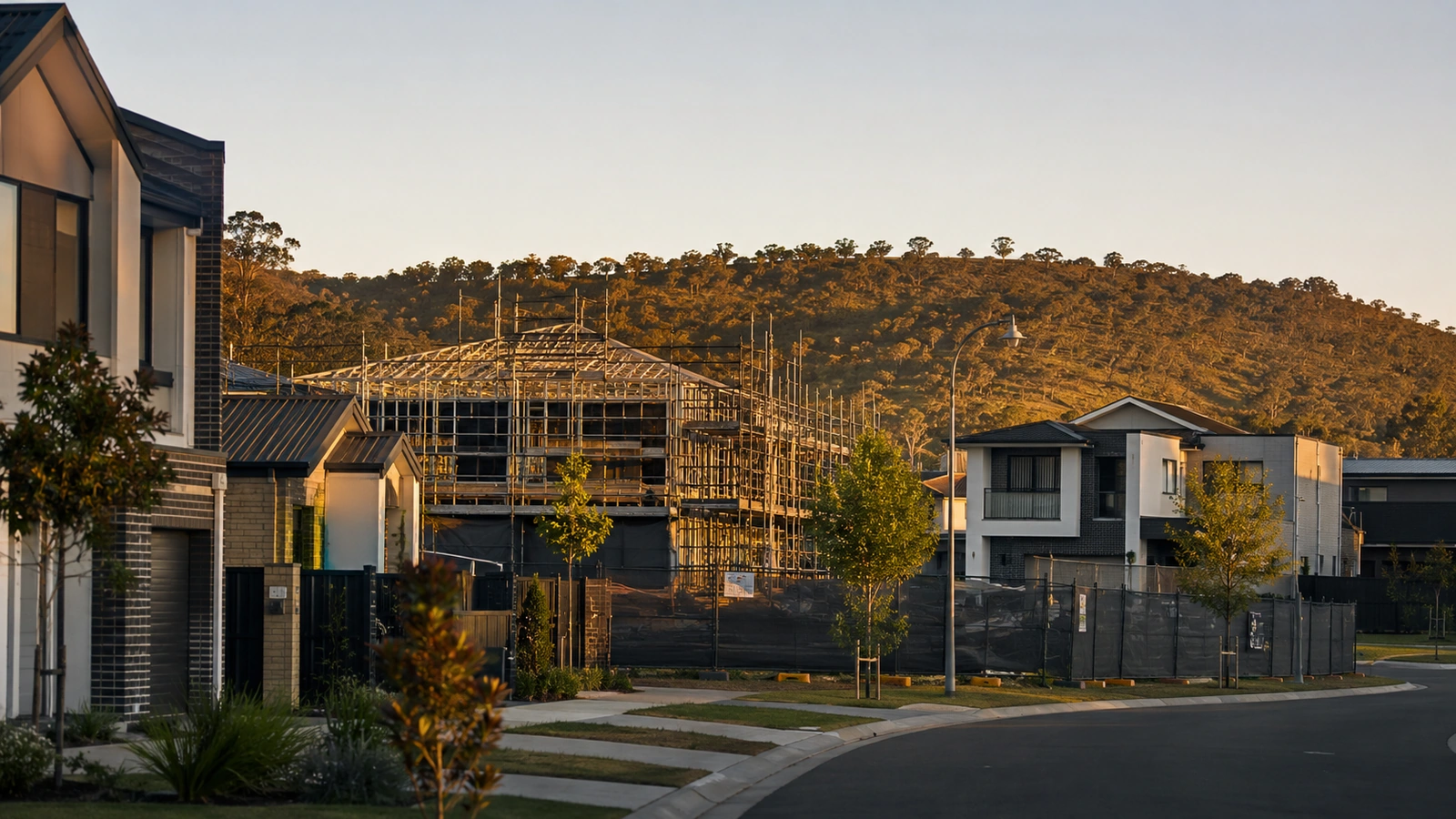
The important point is that a national housing shortage does not make every local property market undersupplied. A city can lack housing overall while a particular suburb has a large pipeline of similar apartments, townhouses or house-and-land packages.
Our analysis of Australian housing supply in 2026 explains why buyers need to examine completed housing, local pipelines and buyer demand rather than relying on national construction targets.
Then there is the cost of borrowing.
As at July 2026, the RBA cash rate is 4.35 per cent. The Reserve Bank has said inflation remains too high and has left open the possibility of further tightening if economic conditions require it. You can check the current setting on the RBA cash rate page.
In plain English, Australia has an undersupplied housing system and expensive credit.
That combination can support property values in supply-constrained markets while making individual ownership harder to sustain.
Do not confuse the national market with your target market
There is no single Australian property market.
Sydney does not behave like Perth. Inner Melbourne apartments do not behave like detached homes in established Brisbane suburbs. A mining-dependent regional town carries different risks from a diversified employment centre.
Even within one suburb, two properties can produce different results because of land value, zoning, building quality, flood exposure, strata costs and buyer demand.
The national property outlook provides context. It does not tell you what to buy.
A local market assessment should examine:
-
Population growth and what is driving it
-
Employment diversity and wage growth
-
Rental vacancy and tenant demand
-
Existing listings and days on market
-
Building approvals and the future supply pipeline
-
Zoning changes and developable land
-
Local incomes relative to property prices
-
Flood, bushfire, insurance and building risks
The relationship between these factors matters more than any single figure.
A suburb can have strong population growth and still underperform if developers can add housing faster than demand grows. Another suburb may record modest population growth but remain resilient because listings are scarce and local households have strong incomes.
The AbodeFinder guide to spotting growth suburbs early explains how to assess stock levels, days on market, vendor discounting, demand and future supply.
If you know you want to buy but are unsure where to focus, an AbodeFinder Suburb Shortlist and Buy Box can narrow the search to three to five locations based on your budget, goals and property preferences.
Get a focused suburb shortlist before you spend months reacting to random listings.
Interest rates change the numbers, not the investment principles
Some buyers are waiting for interest rates to fall.
That may be sensible if current repayments would leave them financially exposed. It becomes less useful when waiting for rates is simply a way to avoid making a decision.
Lower rates can improve borrowing capacity. They can also bring more buyers into the market and increase competition.
Higher rates reduce borrowing power. In some market segments, they may reduce competition and create more room to negotiate.
Neither environment is automatically good or bad.
The practical next step is to model the purchase under three conditions.
Base case
Assume interest rates remain close to their current level. Allow for ordinary maintenance, realistic rent and a normal period of vacancy.
Downside case
Assume the property is vacant for several weeks, rent growth stalls, an unexpected repair arises and the mortgage rate increases.
Upside case
Assume rates decline, rental income improves and local housing demand continues to exceed supply.
The investment should not depend on the upside case.
If the purchase becomes unmanageable under a plausible downside, the loan or property is too aggressive for your current position.
The AbodeFinder 2026 Property Investment Playbook examines how rates, yields, vacancy, supply and serviceability interact when assessing a purchase.
Serviceability is more than getting loan approval
Serviceability is your ability to meet mortgage repayments and other property costs from your available income.
Banks apply a mortgage serviceability buffer of at least three percentage points above the loan rate when assessing new borrowers. APRA confirmed in its May 2026 system risk outlook that this buffer remains in place.
The buffer helps lenders account for possible changes in interest rates, income and household expenses. You can review the current policy in APRA’s System Risk Outlook.
Passing the bank’s assessment does not mean you should automatically borrow the maximum amount offered.
Your personal limit should account for:
-
Job and income stability
-
Dependants and household expenses
-
Existing debts
-
Expected property expenses
-
Future lifestyle changes
-
Accessible cash after settlement
-
Your tolerance for repayment pressure
The bank is testing whether you appear capable of repaying the loan. It is not deciding whether the property supports your wider financial plan.
Your maximum budget and your sensible budget are not always the same number.
Why holding power matters more than perfect timing
Holding power is your ability to keep a property when conditions become uncomfortable.
It comes from manageable debt, stable income, adequate insurance and an accessible cashflow buffer.
Consider two investors.
The first buys before a period of strong price growth but uses nearly all available cash for the deposit and settlement costs. A vacancy and major repair occur in the same year. The investor has to sell earlier than planned.
The second investor enters later and pays a higher price. However, the buyer maintains a cashflow buffer and can continue holding through weaker conditions.
The first investor selected the better entry point. The second may achieve the better financial result.
This is the part many buyers miss.
You cannot benefit from a long-term property strategy if short-term pressure forces you to sell.
Before purchasing, estimate the cost of mortgage repayments, council rates, insurance, property management, maintenance, land tax where applicable and periods without rental income.
Then keep an additional household emergency buffer separate from the money allocated to the property.
Entry price matters. Holding power matters more.
Risk check: what could break the investment case?
Every property investment needs a clear failure test.
If your strategy relies on population growth, ask what happens if migration slows.
If it relies on a new transport project, confirm that the project is funded. Then assess whether the expected benefit is already reflected in local prices.
If it relies on limited housing supply, inspect zoning, development approvals and the construction pipeline.
If it relies on rapid rent growth, test the numbers with flat rent.
Common red flags include:
-
Repayments that consume nearly all your monthly surplus
-
No accessible cash for repairs or vacancies
-
A decision based mainly on recent capital growth
-
Heavy dependence on one local employer or industry
-
High strata costs that reduce the effective yield
-
A large pipeline of competing properties
-
Flood, bushfire or insurance exposure that has not been priced
-
A purchase that only works if rates fall soon
These risks do not always mean you should reject a property. They mean the expected return needs to justify the exposure.
AbodeFinder assesses property through probabilities, not certainties.
The goal is not to remove every risk. That is impossible. The goal is to understand which risks you are accepting and whether you have the financial capacity to carry them.
If you have already found a property, an AbodeFinder Deal Review provides an independent assessment of the property, suburb, key risks and likely price range before you commit.
Request a Deal Review before an agent’s deadline turns uncertainty into an expensive decision.
Should you focus or diversify?
Diversification can reduce concentration risk, but spreading limited capital across assets you do not understand is not automatically safer.
A practical rule of thumb is to build knowledge in one asset class and apply a consistent assessment process. Diversify when a specific concentration risk becomes material.
Within property, diversification can come from location, price point, tenant profile, dwelling type and exposure to local industries.
Here’s the catch.
Owning property in several states does not create useful diversification if every market relies on the same economic driver.
Four properties across different mining towns may still leave the portfolio heavily exposed to commodity prices. Several apartments across different cities may still carry similar supply, strata and investor-demand risks.
Diversification should solve a defined problem. It should not exist simply to make a portfolio look more sophisticated.
Buying interstate can widen the available options, but distance does not replace due diligence. Read what investors get wrong when buying interstate before treating another state as an automatic diversification strategy.
Should you buy now or wait?
Buying in 2026 may be reasonable if you have:
-
Stable income
-
A sufficient deposit
-
An accessible cashflow buffer
-
A long-term holding period
-
A property supported by local evidence
-
Repayments that remain manageable under a downside scenario
Waiting may be the stronger decision if the purchase would exhaust your savings, depend on immediate capital growth or leave your household exposed to a small change in income or expenses.
Waiting should still have a purpose.
You might use the time to reduce consumer debt, increase your income, strengthen your deposit, improve your credit position or research suitable markets.
“I’ll wait and see” is not a strategy unless you know what needs to change before you act.
Set a measurable condition.
That could be reaching a target deposit, maintaining a specific cash reserve after settlement or reducing a debt that is affecting borrowing capacity.
A clear condition turns waiting into preparation.
What the lending data says
The ABS reported that the number of new dwelling loan commitments fell by 6.2 per cent in the March quarter of 2026 following interest rate rises earlier in the year.
Despite that quarterly fall, the number of commitments remained 8.6 per cent higher than a year earlier. Investor loan commitments were 18.8 per cent higher over the year.
You can review the figures in the latest ABS Lending Indicators.
The signal is that higher rates have affected buyer activity, but demand for property credit has not disappeared.
The data still cannot tell you whether an individual property is suitable.
That decision comes back to your finances, the local supply and demand balance, the property’s quality and your ability to hold it.
Your 2026 property decision checklist
Before making an offer, answer these questions:
-
What is the purpose of the purchase?
-
What monthly shortfall can your household carry?
-
How long could you hold if property prices remained flat?
-
What happens if your mortgage rate rises?
-
What local factors support housing demand?
-
What future supply could compete with the property?
-
What property-specific risks have you identified?
-
What evidence would prove your investment thesis wrong?
-
How much accessible cash will remain after settlement?
-
Does the purchase work without rapid rent or price growth?
If several answers remain unclear, the next step is more due diligence. It is not a rushed offer.
If you are still deciding where to buy, start with an AbodeFinder Suburb Shortlist.
If you have found a specific property, request an AbodeFinder Deal Review before moving forward.
The bottom line
Property buyers in 2026 face a difficult mix of high borrowing costs, persistent inflation and constrained housing supply.
Those conditions do not create a universal instruction to buy. They create a need for better property selection and stronger risk management.
Do not wait for every headline to turn positive. Markets rarely offer certainty and attractive buying conditions at the same time.
Do not buy because someone claims the opportunity is about to disappear. A deadline without supporting evidence is a sales tactic, not an investment thesis.
Focus on what you can control:
-
Entry price
-
Debt
-
Cashflow buffer
-
Property quality
-
Holding period
Then use current data to examine what you cannot control.
Start by running your numbers with the AbodeFinder Buying Chance Calculator.
If the numbers work but you do not know where to focus, get a Suburb Shortlist and Buy Box.
If you have already found a property and want an independent assessment before committing, request an AbodeFinder Deal Review.
Clear numbers. Clear risks. Clear next step.
General information only, not financial advice.